When equipment breaks down on a job site, every hour it sits idle costs you money. A reliable mobile welder in Perth brings the workshop to you, whether that’s a mine site in the Pilbara or a farm in the Wheatbelt. I’ve spent over 20 years fixing heavy iron where it stands, because dragging an excavator back to town for a simple crack repair rarely makes financial sense.
You need a tradesman who turns up with the right gear and the certification to sign off on structural work on the spot. ATMA Welding Services is based in Walliston but mobilises across Perth metro and regional WA, handling everything from emergency breakdowns to planned fabrication projects. My approach is simple: turn up when I say I will, fix it properly the first time, and get you back to work.
What a Mobile Welding Service in Perth Actually Covers
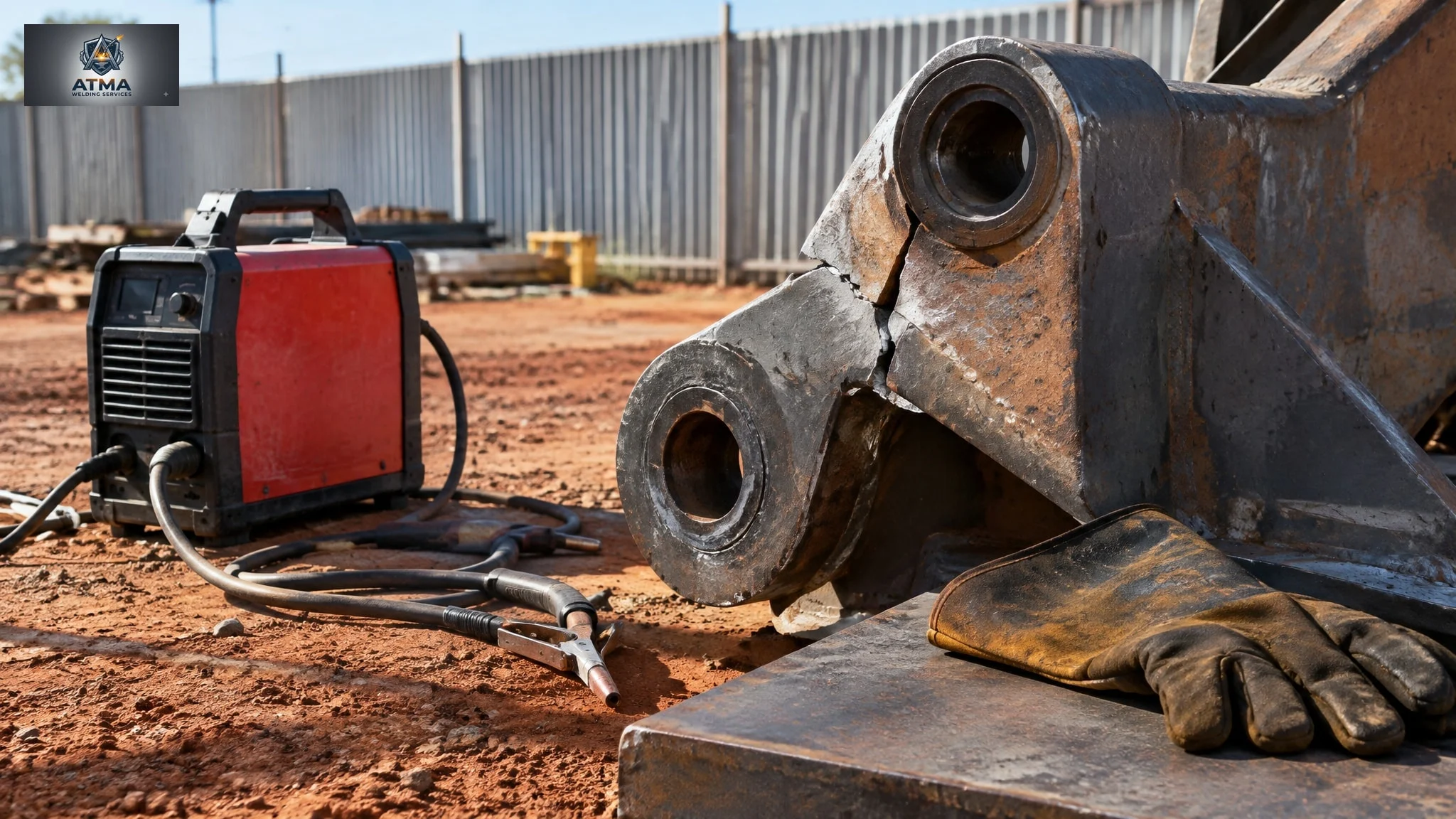
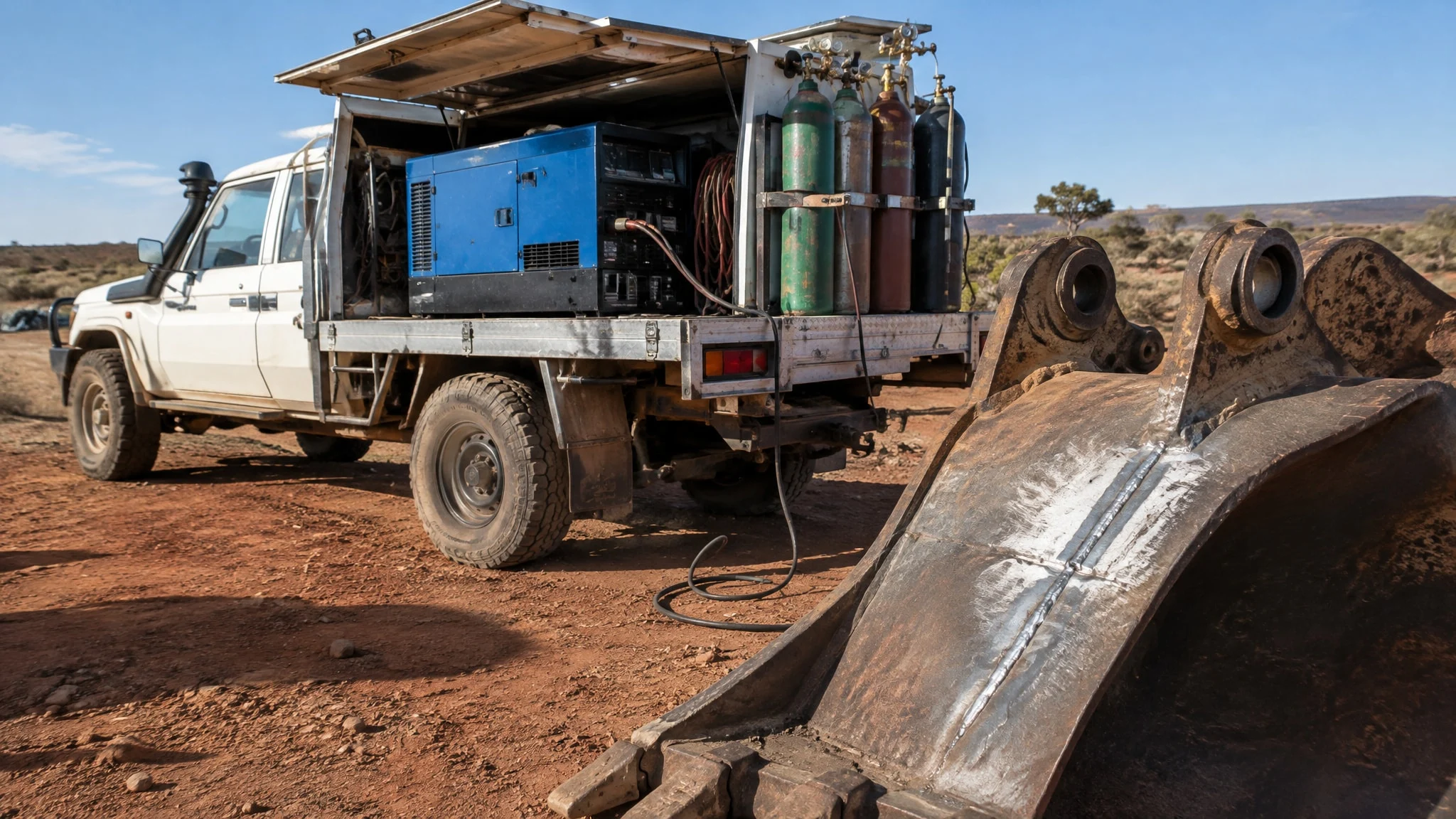
A mobile welding service in Perth has to be completely self-sufficient, because remote job sites rarely have spare power or gas for contractors to use. My truck carries its own generators, compressors and a full range of welding plant, so I never depend on your site infrastructure to get the repair done.
Onsite vs Workshop: When to Call a Welder to You
Not every job suits a mobile setup, and knowing the difference saves you time and money. Onsite repairs work best for heavy machinery that’s hard to transport, fixed infrastructure like gates or conveyors, and urgent breakdowns where any transport delay is unacceptable. Jobs needing extensive machining, large fabrication jigs or powder coating still belong in a controlled workshop, where the precision tooling actually lives.
If the component can be unbolted and loaded onto a ute, bringing it to the shop might be cheaper. If it weighs five tonnes or is bolted into a production line, the welder comes to you.
Equipment and Capabilities on the Truck
My mobile unit is set up for heavy industrial repair, not light automotive work. That includes diesel-driven welders that can run carbon arc gouging for crack preparation, hydraulic torque wrenches for reassembly, and a solid stock of high-tensile consumables matched to mining-grade steels. With all of that on board, I can diagnose, prep, weld and test a repair in a single visit, without waiting on parts or coming back with different gear.
Heavy Earthmoving and Mining Equipment Repairs Onsite
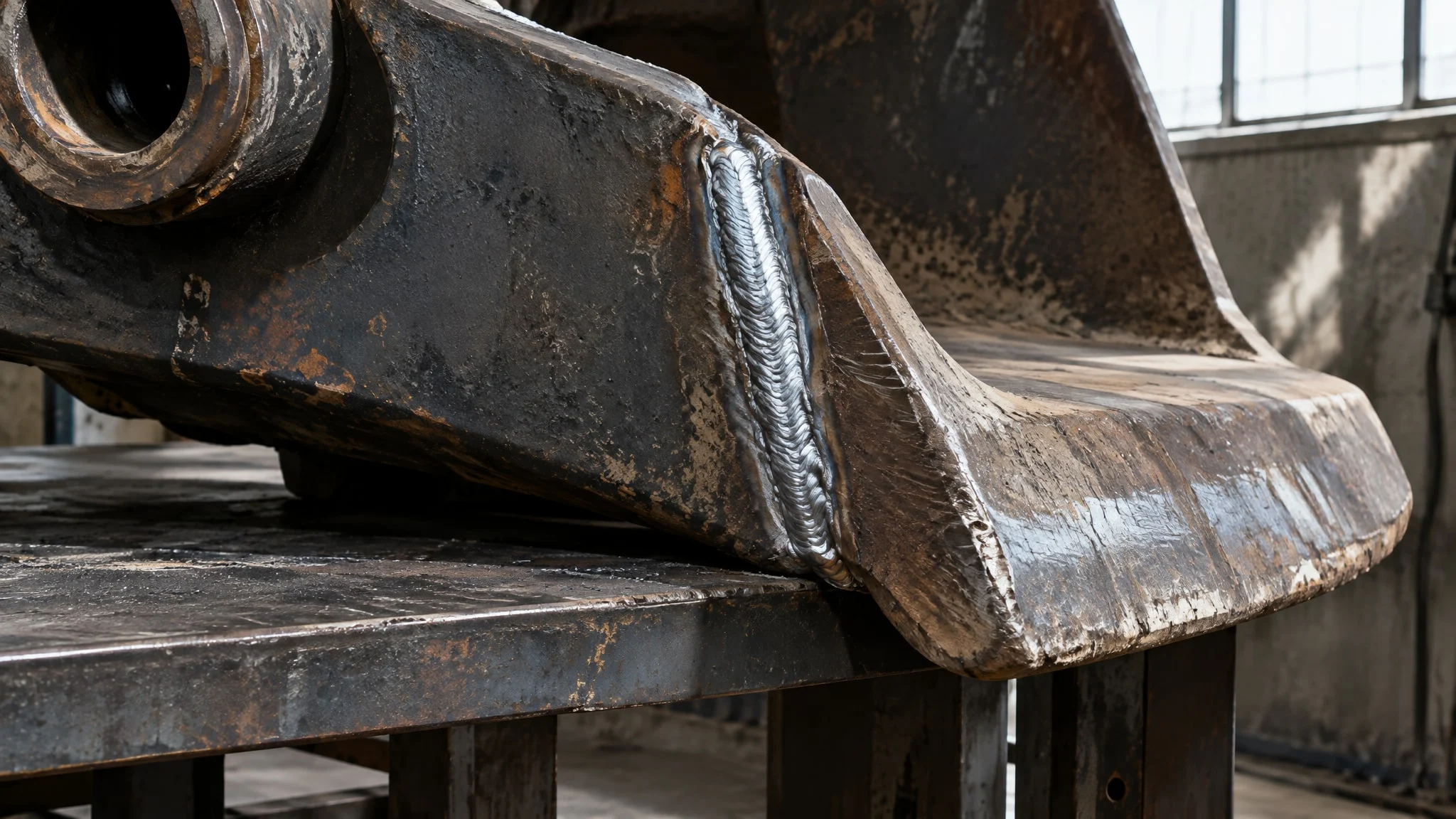
Bucket rebuilds, boom crack repairs and mining equipment overhauls performed directly onsite make up the core of my daily workload. These machines run under extreme cyclic loading in WA conditions, and that demands repair procedures that actually restore structural integrity, not just fill a gap with weld metal.
Bucket, Boom and Attachment Rebuilds
Wear edges, bucket lips and boom pivot points take a beating in hard rock and abrasive soil. I rebuild these using certified wear plate and high-strength filler metals matched to the original equipment manufacturer’s specifications. Proper preheating and post-weld heat treatment are standard on thick sections to prevent hydrogen cracking. That’s a common failure point in rushed field repairs.
Minimising Downtime During Critical Breakdowns
Transporting a 30-tonne excavator from a remote site to a Perth workshop means low loaders, escort vehicles and days of non-productive time. Doing the repair in situ cuts out the logistics entirely and often gets the machine running again within hours of diagnosis. You skip the freight and yard fees and keep your project schedule intact.
This is where having a welder come to you, rather than the other way around, is the difference between a minor interruption and a major budget blowout.
Emergency Mobile Welder Response and Availability
Breakdowns don’t respect business hours, and neither does a proper emergency mobile welder service. I keep myself available for after-hours and weekend callouts across the metro area, because a Saturday morning failure costs just as much as a Tuesday one.
After-Hours and Weekend Callouts
Emergency response depends on where I am and what I’ve already got on, but I prioritise safety-critical failures and anything stopping production. Call outside standard hours and you speak to me directly, not an answering service or a dispatch centre. That means we can work out together whether it needs attention right now or can wait until first light without risking further damage.
Assessing Urgency Over the Phone
Good triage saves a wasted callout and means I arrive with the right gear for the job. I need the machine type, failure location, material thickness and how accessible it is before I leave the yard. Send photos by text or email before I head off, and I can confirm the repair’s feasible onsite and load any specialised consumables I might need.
Service Area Coverage Across Metro and Regional WA
I’m based in Walliston and cover Perth metro, the Perth Hills and regional WA, for both emergency callouts and planned shutdowns. My operating radius goes well beyond the suburbs. Standard mobile callouts cover the Perth metro area and surrounding agricultural zones efficiently, thanks to a central base.
Regional work for mining, oil and gas, and large agricultural projects runs differently, on scheduled site visits rather than reactive callouts. Clients in the Goldfields, Mid West and Pilbara typically book a dedicated shutdown window, where I knock over multiple repairs or fabrication jobs in a single deployment. That keeps mobilisation costs reasonable while regional clients still get the same certified workmanship as metro ones.
Custom Fabrication and Structural Steel Projects
Mobile welding isn’t limited to breakdowns. It also covers planned custom work where carting materials to a workshop doesn’t make sense. I regularly do trailer modifications, gate installations, handrail fitting and structural steel assembly directly at client properties across Perth and the Hills. The same certification and attention to detail I bring to mining repairs carries over to this work, because structural steel demands precision wherever you’re standing.
Versatility matters when your project combines repair work with new fabrication in a single visit. You can explore the full range of welding and fabrication services available for both emergency and planned work. That flexibility means you don’t need separate contractors for fixing existing steelwork and installing new components.
Choosing a Certified Tradesman Over Directory Listings
Certified structural welding qualifications matter on load-bearing repairs, for safety compliance and for your insurance to actually hold up, which is more than you can say for an unverified listing in a directory. I’ve spent over 20 years welding and fabricating since 2002, including major oil and gas projects like Wheatstone and Ichthys, and that work has reinforced one thing: proper procedure can’t be substituted with enthusiasm.
Why Trade Qualifications Matter for Structural Work
Load-bearing repairs on booms, chassis and lifting equipment have to meet Australian Standards for mechanical properties and defect acceptance. A certified boilermaker understands metallurgy, joint design and the testing that protects operators from catastrophic failure. Insurance companies and mine site safety officers require documented traceability on structural repairs, and only a qualified tradesman can provide that legally.
Experience in Oil, Gas and Mining Sectors
Working on tier-one projects like Wheatstone and Ichthys taught me discipline around quality systems, permit-to-work protocols and documentation that general welding shops rarely see. That background translates directly into better outcomes for earthmoving contractors and farmers who need repairs that survive harsh operating conditions. You can see examples of recent onsite repairs in the portfolio to check the standard of work across different sectors.
Hiring on proximity or an advertised hourly rate alone can leave you exposed to rework costs and liability that far outweigh what you saved.
Getting an Accurate Quote for Onsite Welding Jobs
Transparent pricing starts with accurate information upfront, not a vague estimate that balloons once the welder’s actually on site. For a reliable quote, send clear photos of the damage, the machine make and model, any access restrictions, and the exact job location. Material matters too: repairing Hardox wear plate is a different job from mild steel structural sections, in both consumable cost and time.
I base quotes on an actual trade assessment of the repair, not a generic hourly rate pulled from an online ad. That means the figure you get reflects real complexity, travel distance and material requirements specific to your job. When you’re ready, request a quote for your onsite repair with those details included, for fast assessment and scheduling.
For clients needing both onsite and workshop capability, comprehensive welding and fabrication solutions are set up to handle complex projects across both.
Frequently Asked Questions
How much does a mobile welder charge per hour in Perth?
Hourly rates vary based on job complexity, equipment required, and whether it is standard or after-hours work. Most reputable mobile welders quote on job scope rather than pure hourly rates to account for travel, setup, and consumables specific to each repair. Requesting a detailed quote with photos and site details provides a more accurate figure than relying on advertised base rates.
What is the typical callout fee for emergency mobile welding?
Callout fees cover travel time, fuel, and vehicle depreciation to reach your site, typically ranging from one to two hours of labour depending on distance. After-hours and weekend emergencies usually attract premium rates due to the disruption to personal time and standby availability. Providing exact location and access details upfront helps confirm the applicable fee before dispatch.
Can a mobile welder fix aluminium or stainless steel onsite?
Yes, provided the mobile unit carries TIG or spool gun equipment and the appropriate shielding gases for non-ferrous metals. Aluminium repairs require clean power sources and strict contamination control that some basic mobile setups cannot deliver reliably. Confirming material type when booking ensures the welder brings compatible equipment rather than discovering incompatibility upon arrival.
Do I need to supply power for mobile welding repairs?
No, a fully equipped mobile welding truck carries its own diesel-driven generator and compressor to operate independently of site power. This self-sufficiency is essential for remote farms, mine sites, and roadside breakdowns where grid power is unavailable or insufficient for industrial welding loads. Relying on site power introduces voltage fluctuation risks that can compromise weld quality on sensitive equipment.